The valleyGuide
What is a trullo
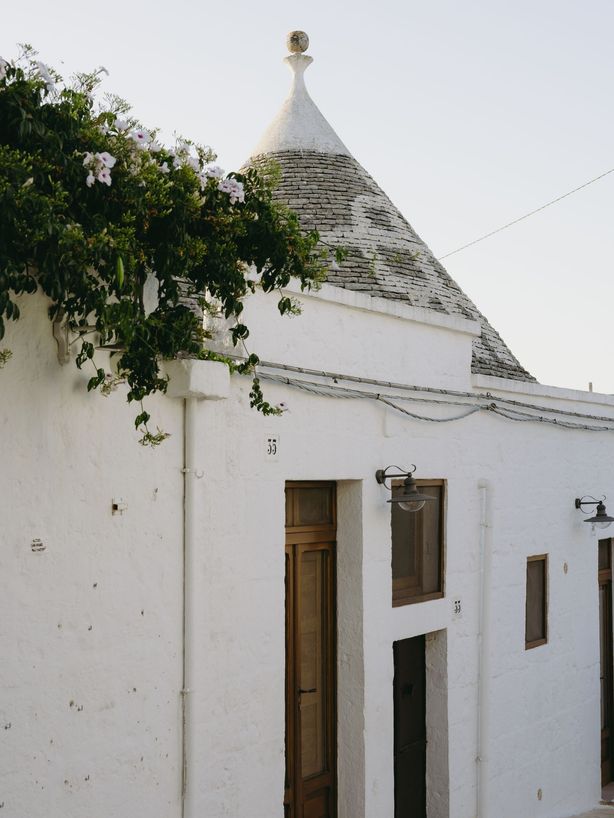
A trullo is a small house of dry-stone limestone with a conical roof, built without mortar in the countryside of Valle d’Itria, Puglia. The walls are up to a metre thick, the roof is a corbelled cone of flat stones, and the whole thing stays cool in August and holds a fire’s warmth in January.
How a trullo is built
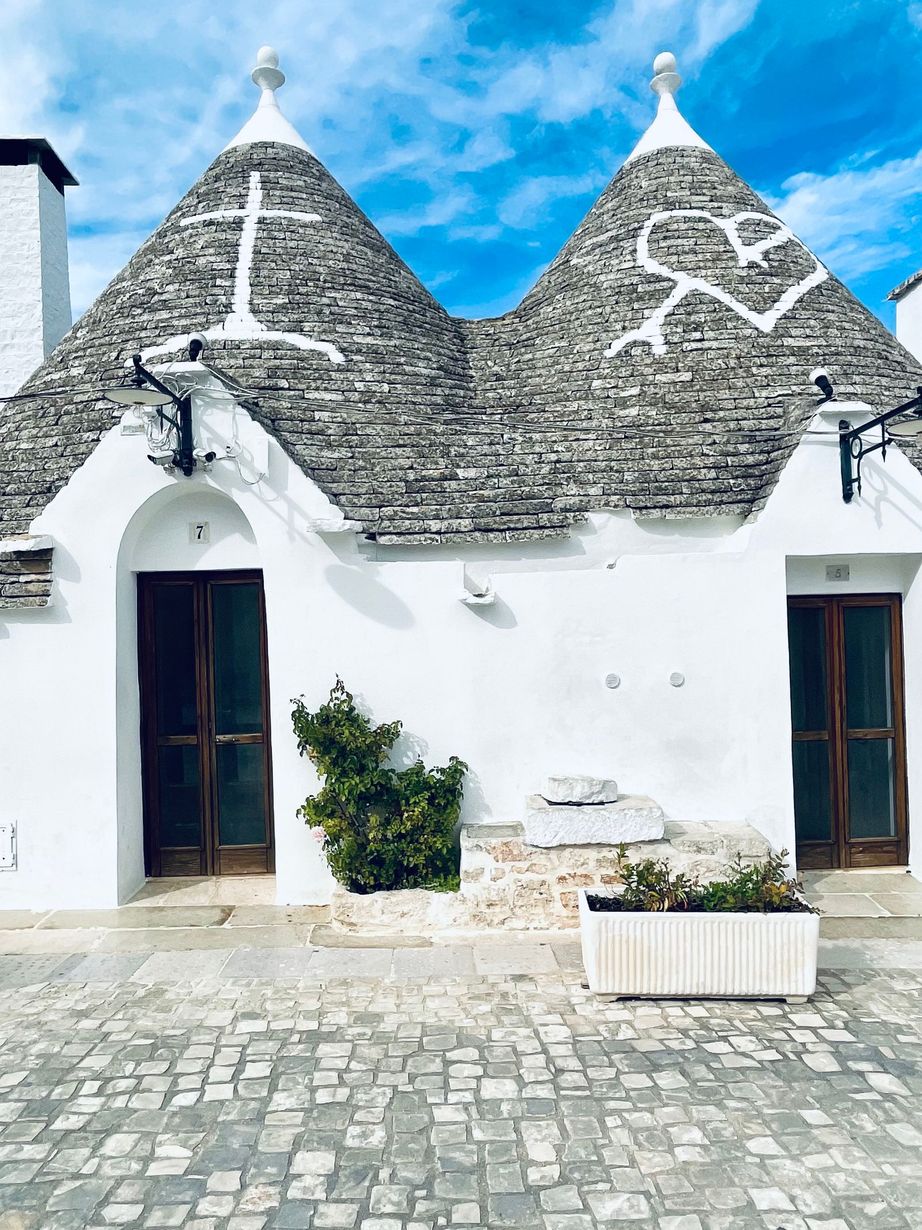
The stone comes out of the ground the house stands on: the field is cleared, the blocks become walls, and the fragments become the roof. Nothing is mortared. The cone is laid as rings of thin limestone slabs, the chiancarelle, each ring set a little inward until the last stone closes the top. A pinnacle finishes it, and the pinnacle’s shape, a disc, a ball, a cross, was the mark of the builder or the family. The inside of the cone is left as bare stone; the walls are whitewashed with lime, inside and out, and every year or two the lime goes on again.
Why the walls are so thick
A metre of stone takes most of a day to warm through and most of a night to cool, so the inside of a trullo lags behind the weather outside. In summer it is the coolest room in the countryside without a machine running; in winter, once the fire is lit, the same walls hold the heat. The small windows are part of the same idea: the less sun that gets in, the less the stone has to absorb. This is why our whole site is built around shade. A trullo is a machine for making it.
Where the shape comes from
Corbelled stone huts exist across the Mediterranean, but the trullo as a house is a thing of the Murgia dei Trulli, the limestone plateau that runs from Alberobello down through Locorotondo, Cisternino and Martina Franca to the slopes above Ostuni. The story every local tells is that they were built dry so they could be pulled down in a day when the tax inspector rode out from Conversano, since a settlement without roofs owed no tax. The truth is probably simpler: this is what the land gave, and this is what the land needed. Most trulli standing today date from the seventeenth to the nineteenth century. Around Ostuni the older, broader cones are often called trulli saraceni.
Sleeping in one
The bedroom of a trullo is a single cone, so you sleep under a stone vault with the pinnacle somewhere above your head. The air is still and cool, the light comes in low through one deep window, and the outside world is a metre of stone away. Restored trulli usually add a modern wing, a lamia with a flat roof, for the kitchen and bathrooms, and put the pool where the threshing floor used to be. Both of our houses are like that: the cone is the bedroom you remember, the rest is the comfort you expect.
Good to know
- Is a trullo hot in summer?
- No, and that is the point of it. The thick dry-stone walls keep the inside several degrees below the afternoon outside, and the cone draws the warm air up and away from the bed. Most restored trulli add air conditioning anyway, for the hottest weeks of August.
- What is the difference between a trullo and a masseria?
- A trullo is a small conical stone house, originally for one family or a single field. A masseria is a fortified farm estate, often with walls, a courtyard and a chapel, built to run a large holding. Many masserie are now hotels; trulli are mostly private houses and holiday homes.
- Where can I see the most trulli?
- Alberobello has around 1,500 in two districts and is a UNESCO World Heritage Site. But the trulli people actually live in are scattered through the countryside between Cisternino, Locorotondo and Martina Franca, and along the roads above Ostuni. Any drive through the valley passes hundreds.
Next
Ostuni
Read